
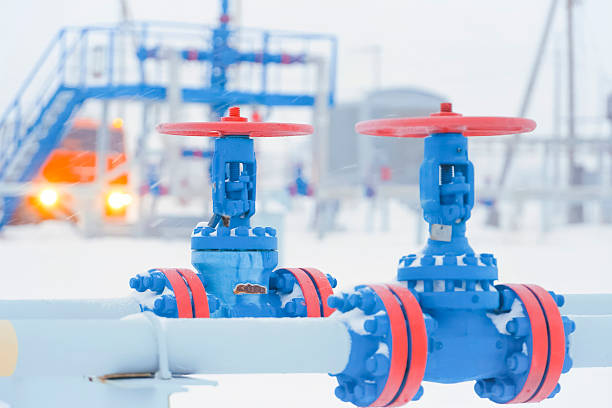
Have you ever turned a handle or pressed a control and thought about what is actually happening inside a fluid system?
Industrial valves are one of those parts people do not always notice at first, yet they do so much behind the scenes. They help fluids move, stop, change direction, and stay at the right rate for the job at hand.
In modern fluid systems, valves help everything feel controlled and steady. From water treatment lines to processing plants, these parts support smooth operation and make it easier to manage flow in a practical way.
What Industrial Valves Actually Do
At the heart of any fluid system, there needs to be a way to manage movement. That is where valves come in. They act like control points inside a pipeline, helping operators decide when fluid should move, slow down, or stop.
In simple terms, a valve opens, closes, or adjusts the path of a liquid or gas. That basic action supports the full system and helps each section do its job clearly.
The Basic Job Of A Valve
A valve controls fluid by changing the opening inside a pipe or passage. When the opening is wide, fluid moves more freely. When the opening becomes smaller or closes, flow changes to match the need.
This can help with:
- Starting or stopping flow
- Adjusting flow rate
- Directing fluid to a different line
- Supporting pressure control
- Keeping system operation steady
It is a simple idea, but it has a big effect on daily performance.
Why Valves Matter In Modern Systems
Modern fluid systems often need accuracy, consistency, and quick response. Valves help make that possible.
Think of them like traffic signals for fluid. They help everything move in an orderly way, so the full setup stays balanced and easy to manage. When the right valve is in the right place, the whole system usually feels more efficient and more controlled.
How Industrial Valves Work Inside A System
When people hear the word valve, they often picture a wheel or lever on the outside. That outer control is important, but the real action happens inside the valve body.
Inside, there is a moving part that changes the path of the fluid. The exact movement depends on the valve type, but the goal stays the same: manage flow in a clear and reliable way.
Opening And Closing The Flow Path
Most valves work by moving an internal part into or out of the fluid path. That part could be a ball, disc, gate, or plug.
Here is the basic process:
- The operator or actuator sends a signal.
- The valve stem or internal mechanism moves.
- The opening inside the valve changes.
- Fluid responds by flowing, slowing, or stopping.
That action can happen manually or through an automated control system. In both cases, the result is smooth flow management that supports the needs of the system.
Different Valve Styles Work In Different Ways
Not all valves move the same way. Each type has its own method, and that method helps suit a certain job.
Here is a simple comparison:
|
Valve Type |
How It Works |
Common Use |
|
Ball valve |
A ball with a hole turns to open or close the flow |
Quick shut-off |
|
Butterfly valve |
A disc rotates inside the pipe |
Flow control in larger lines |
|
Gate valve |
A gate lifts up or lowers down |
Full open or full close service |
|
Globe valve |
A plug moves to adjust the flow through a seat |
More precise flow adjustment |
This is why valve choice matters. The internal movement affects how the fluid behaves and how easy the system is to control.
Common Valve Types In Fluid Systems
Different systems ask for different kinds of control. Some need a quick shut-off, some need a gradual adjustment, and some need a compact option for larger pipes.
Knowing the basic valve types makes it easier to understand how modern systems stay organized and effective.
Ball Valves For Simple Flow Control
One of the most familiar options in many systems is ball valves. These use a round ball with an opening through the center. When those opening lines up with the pipe, fluid moves through. When the ball turns, the flow stops.
This style is popular because it offers:
- Quick quarter-turn operation
- Clear open and close positions
- Smooth flow path
- Easy day-to-day use
In systems that need direct and reliable shut-off, this valve type is often a very practical choice.
Butterfly Valve For Compact Operation
A butterfly valve works with a disc that rotates inside the pipe. It is often used in larger systems where saving space matters and quick control is useful.
Its benefits often include:
- Compact shape
- Fast operation
- Good control across wider pipe sizes
- Straightforward installation
This makes it a useful part of many modern fluid systems where efficient use of space is important.
PVC Ball Valves In Suitable Applications
In some systems, material choice is just as important as valve type. Like, pvc ball valves are often used where lightweight construction and clean fluid handling are useful.
They are commonly valued for:
- Corrosion resistance
- Low weight
- Smooth operation
- Practical use in the right fluid environments
When the material suits the application, the valve can support steady and reliable performance over time.
What Helps Valves Perform Well In Modern Systems
A valve does its best work when it matches the system around it. That means type, size, material, and control method all need to fit together in a sensible way.
A good fit supports smoother flow and more predictable operation. It also helps operators feel more confident in daily use.
Key Factors That Support Good Valve Performance
A few things usually shape valve performance more than anything else:
- Fluid type
- Pressure level
- Temperature range
- Pipe size
- Control needs
- Installation space
When these points are considered early, the valve can support the system more effectively from day one.
Manual And Automated Valve Operation
Modern systems often use both manual and automated valves. Manual valves work well when direct human control is enough. Automated valves help when the system needs regular adjustment or remote operation.
Both options play an important role. The best choice depends on how the system is used and how often the flow conditions change.
Conclusion
Industrial valves help modern fluid systems stay controlled, steady, and easy to manage. They open, close, and adjust flow in ways that keep operations moving smoothly across many kinds of applications.
Once you understand how valves work inside a system, the full setup becomes much easier to picture. It is all about guiding fluid in the right way at the right time, and that simple function supports reliable performance every day.