
Key Highlights
- Cross-docking is a logistics strategy that transfers products directly from inbound to outbound trucks, minimizing storage time.
- This approach significantly speeds up your supply chain, leading to faster delivery times for customers.
- By reducing the need for traditional warehousing, you can dramatically lower storage costs and handling expenses.
- Implementing cross-docking improves overall supply chain efficiency, keeping your products moving without delay.
- The process involves receiving, sorting, and immediately loading goods for their next journey.
- It is particularly effective for perishable goods, high-turnover retail items, and time-sensitive products.
Introduction
In the world of supply chain management, speed and efficiency are everything. Businesses are constantly searching for a logistics strategy that can streamline their supply chain process and get products to different destinations faster. While traditional warehousing methods have their place, they can often slow things down. Cross-docking offers a powerful alternative. This approach is designed to keep your freight moving, cutting out the need for long-term storage and pushing products straight into the next leg of their journey.

Understanding Cross-Docking in Logistics
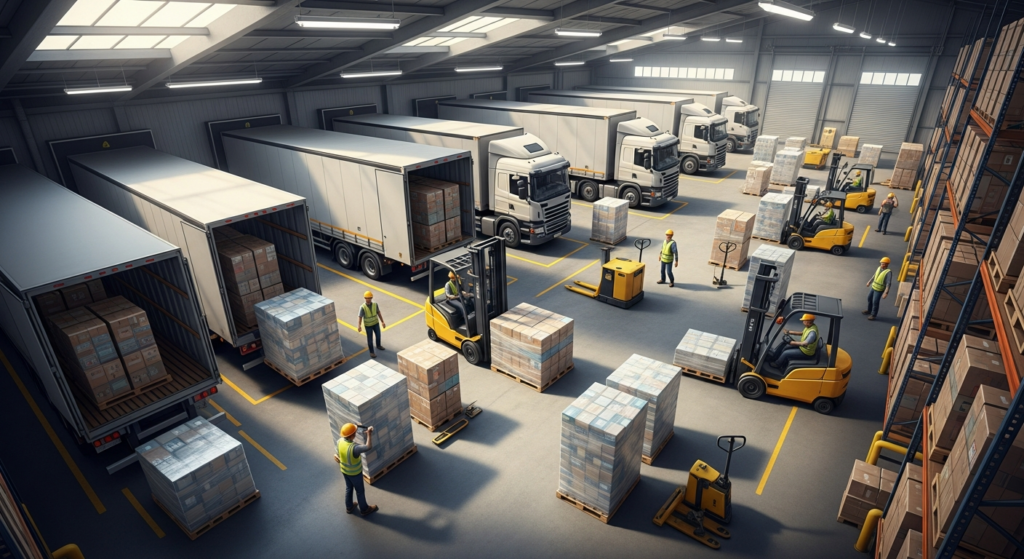
Cross-docking is a logistics process where incoming goods are quickly unloaded, sorted, and loaded onto outbound trucks with minimal storage space and little to no storage time. The goal is to keep products moving, minimizing delays, and getting items from the supplier to the customer as fast as possible.
Unlike traditional warehousing—which stores products for days or weeks—cross-docking skips the storage step. This approach speeds up delivery, reduces handling, lowers costs, and boosts supply chain efficiency.
The Step-by-Step Cross-Docking Process
The cross-docking logistics process is a highly coordinated system focused on speed. It starts when inbound trucks arrive and ends as outbound shipments leave, ensuring goods move quickly through the supply chain to their final destination.
This efficiency relies on precise coordination at every stage—unloading, sorting, and loading. Here are the key steps that make this fast-turn model effective.
Receiving Goods and Initial Inspection
The process begins when inbound trucks arrive at the receiving dock and inbound docks. Once the doors open, teams quickly unload the freight.
Each shipment is scanned on arrival to ensure real-time supply chain visibility and confirm product accuracy. This scan enters the items into the management system.
A fast inspection for damage and accuracy follows, ensuring quality from the start. This efficient receiving process speeds up the supply chain by preparing goods for immediate sorting and transfer.
Sorting, Staging, and Direct Loading
Once goods are received and scanned, sorting begins—the heart of cross-docking. Instead of storing items, they’re immediately sorted by destination, route, or carrier.
The aim is to consolidate products from different inbound trucks into unified outbound shipments. For example, items from multiple suppliers going to the same store are grouped together in a central staging area.
From there, goods move directly to outbound docks for immediate loading onto waiting vehicles. This streamlined process reduces handling and keeps products moving.
- Sorting: Freight organized by destination or route
- Consolidation: Shipments from various sources are grouped together
- Loading: Products loaded directly onto outbound trucks
Coordinating Shipments and Scheduling
Effective cross-docking requires precise coordination, with shipment scheduling ensuring inbound and outbound vehicles are perfectly synchronized to minimize the flow of goods and dwell time. Real-time logistics platforms provide essential visibility into shipments, preventing bottlenecks and enabling teams to manage schedules carefully.
This coordination ensures outbound shipments depart on time, leading to faster, predictable deliveries. Meticulous planning is key to the supply chain efficiency that makes cross-docking so effective.
Types of Cross-Docking Operations
Cross-docking isn’t a one-size-fits-all solution; different types suit specific supply chain needs, including retail stores. Its main purpose is to move goods quickly through distribution centers, minimizing storage time. In retail, manufacturers may pre-tag items for faster sorting. Perishables require temperature control throughout the process.
Each type streamlines product flow for various industries—whether consolidating shipments or breaking down bulk deliveries for last-mile distribution at a shipping dock. Choosing the right approach can greatly boost efficiency. Common cross-docking types include:
| Type | Description |
| Manufacturing | Combines inbound supplies for just-in-time production and utilizes efficient outbound doors for seamless logistics. |
| Distributor | Merges products from multiple suppliers into mixed pallets for single customers. |
| Retail | Sorts and ships pre-labeled goods from several suppliers to different stores. |
| Transportation | Consolidates smaller shipments from various carriers into one truckload to cut costs. |
| Opportunistic | Moves select products straight from inbound to outbound docks to meet urgent demand. |
Key Benefits of Cross-Docking for Supply Chains
Adopting cross-docking in your supply chain can offer major advantages, starting with lower supply chain costs—especially for warehousing and inventory. By minimizing storage time, you reduce the need for large warehouse space and cut storage expenses.
This streamlined approach makes your supply chain more efficient, with faster product movement and fewer handling errors. Let’s look at these key benefits in detail.
Faster Delivery Times and Supply Chain Efficiency
In today’s competitive market, fast delivery sets you apart. Cross-docking speeds up your supply chain by skipping warehousing, cutting days from delivery cycles.
Shorter lead times boost customer satisfaction—faster arrivals mean happier, more loyal customers. Streamlined logistics become a key advantage.
A more efficient supply chain is also more reliable. Fewer touchpoints and less warehouse time reduce the risk of misplaced or damaged products. Your freight moves faster and smarter, ensuring a smooth journey from supplier to customer.
Reduced Inventory Holding and Storage Costs
One of the biggest advantages of cross-docking is substantial cost savings and a reduced environmental impact. Unlike traditional warehousing, which requires large spaces and high expenses for rent, utilities, and labor, cross-docking moves products directly from receiving to shipping—minimizing storage time.
This reduces your need for warehouse space, allowing you to downsize or even eliminate storage facilities. Less idle inventory means less money tied up in stock, which contributes to lower operational costs, freeing capital for other business needs.
Key cost savings include:
- Lower storage costs: Reduced need for warehouse space cuts overhead.
- Lower labor costs: Fewer handling steps save time and money.
- Less inventory damage: Minimal handling decreases risk of breakage or spoilage.
Improved Product Flow and Responsiveness
Cross-docking enables a continuous, predictable product flow through your distribution center, keeping goods constantly moving in and out of dock doors. This agility lets you quickly respond to changing customer orders and market demands. When demand spikes, cross-docking gets products from the supplier to the store shelf faster than traditional warehousing.
Quick fulfillment keeps you ahead of competitors with faster delivery and flexible operations, making your business more resilient and customer-focused. It turns logistics from a cost center into a driver of growth.
Common Challenges and Solutions in Cross-Docking
While cross-docking offers many benefits, it also presents challenges. It demands strong coordination with suppliers, as missed deliveries can disrupt the supply chain. Setting up a facility requires significant investment in technology and layout, and tight scheduling can strain labor resources, potentially increasing labor costs.
These hurdles can be overcome with the right partner and technology. Working with an experienced 3PL like AMS eGroup, leveraging real-time visibility tools, and building strong supplier relationships are key to success. With proper infrastructure and expertise, cross-docking can become a seamless and profitable part of your entire supply chain.
Conclusion
In conclusion, cross-docking is a powerful logistics strategy that streamlines supply chains by reducing inventory holding times and preventing products from being stored for long periods, ultimately improving product flow. This leads to faster deliveries and lower costs. Implementing the cross-docking process helps businesses optimize operations and respond quickly to market demands. While challenges exist, they can be addressed with careful planning and the right technology. Consider how cross-docking can enhance your logistics and benefit your business today.
Frequently Asked Questions
What types of products are best suited for cross-docking?
Products with high turnover and predictable demand are ideal for cross-docking. This includes perishable goods like fresh food, fast-moving items in the retail sector, and pre-tagged promotional products. Any item where speed is critical and effective inventory management is important, and storage time needs to be minimized, benefits from this continuous product flow.
What technology is essential for effective cross-docking?
Effective cross-docking like AMS eGroup relies on efficient operations and robust technology. A sophisticated warehouse management system (WMS) is crucial for real-time tracking, scheduling, and coordination. Barcode scanners and data synchronization platforms are also essential to ensure seamless operational efficiency and accurate supply chain management without needing extensive warehouse space.